The Rio de Janeiro Declaration adopted at the 2025 BRICS Summit recognised the "key role" of critical minerals for zero- and low-emission energy technologies, energy security and resilient energy supply chains.
BRICS countries called for reliable, responsible, diversified, resilient, fair, sustainable and just critical-mineral supply chains. The declaration also stressed benefit sharing, value addition and economic diversification in resource-rich countries while recognising their sovereign rights over natural resources.
For the Global South, the issue goes beyond securing raw materials for clean technologies. It also raises questions about processing, refining, manufacturing and whether resource-rich developing countries can capture a larger share of the value generated by the green transition.
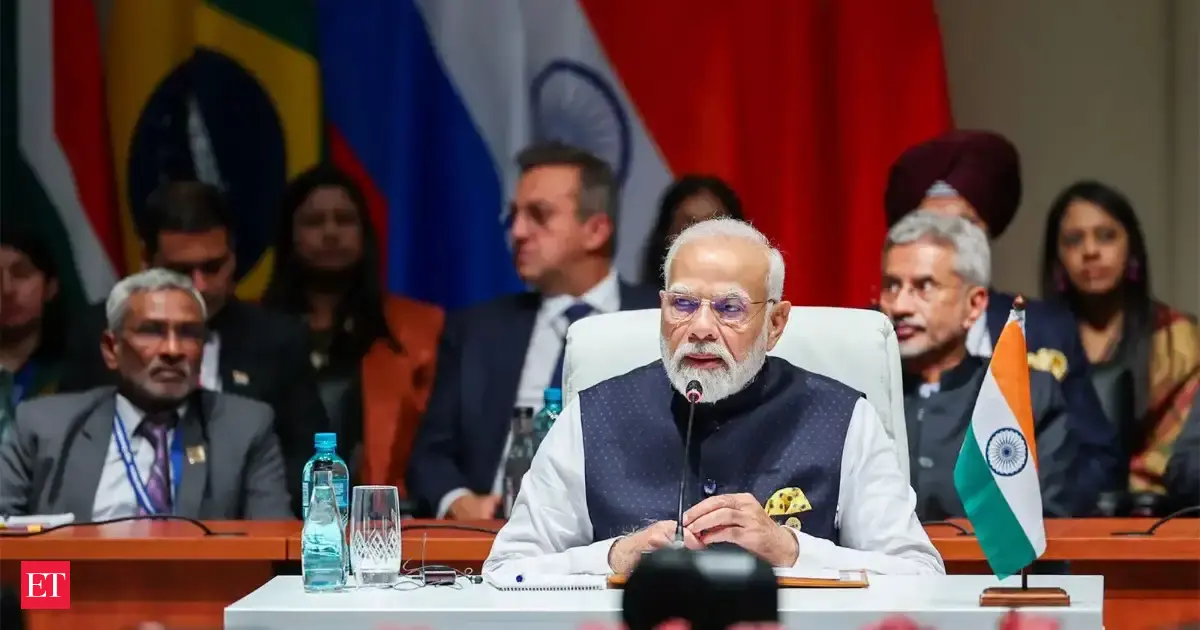
Prime Minister Narendra Modi, while addressing the 17th BRICS Summit in Brazil, had called for making critical-mineral supply chains secure and resilient, arguing that no country should use such resources as a weapon.
As demand grows for minerals used in electric vehicles, batteries, renewable-energy systems and energy storage, critical minerals are increasingly becoming a link between climate action, energy security and economic sovereignty.
While energy transition focuses on reducing future emissions, climate adaptation is becoming increasingly important for countries already dealing with climate-related risks.
At the 12th BRICS Environment Ministers' Meeting in New Delhi in August, Environment Minister Bhupender Yadav called for stronger cooperation on forest-fire prevention, preparedness, early warning, response and post-fire recovery, while stressing the importance of climate finance, adaptation and empowering local communities.
The meeting placed climate change, biodiversity loss, pollution and disaster risks at the forefront of environmental concerns, particularly for developing countries where environmental vulnerability intersects with development priorities. The meeting concluded with the adoption of a Joint Ministerial Statement and the launch of four knowledge compendiums prepared by the BRICS Environment Working Group.
The focus on adaptation gives the BRICS climate agenda a people-centric dimension, placing resilience and protection of vulnerable communities alongside mitigation and emissions reduction. But the ability of developing countries to undertake both mitigation and adaptation will ultimately depend on access to finance.