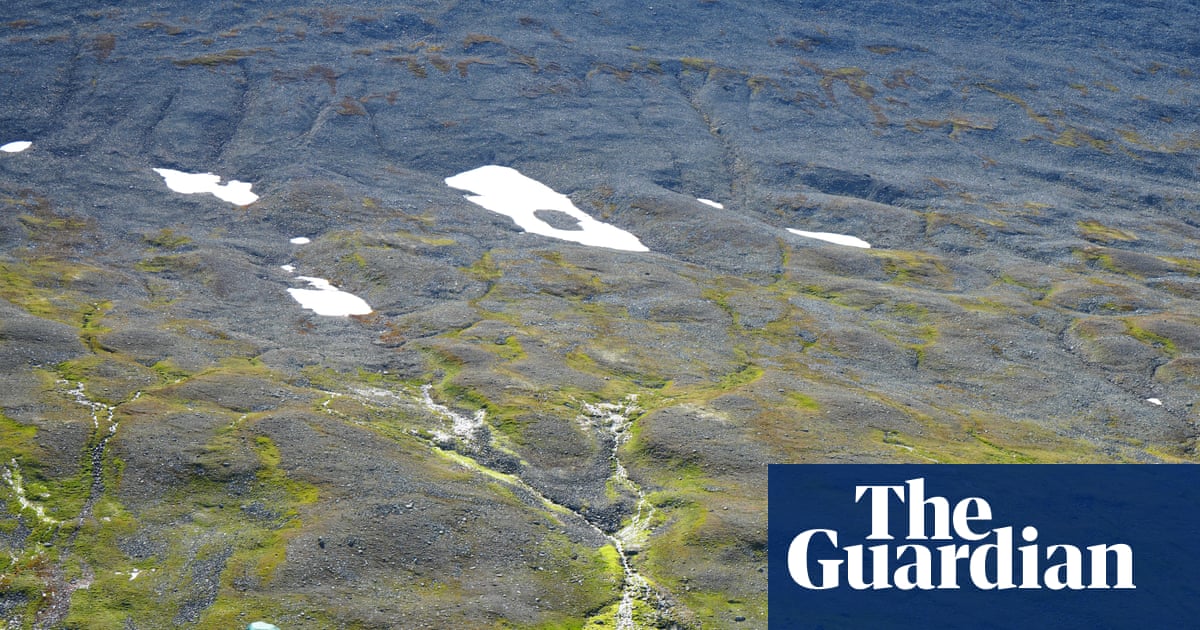
Alkavare sits on the western border of Sweden’s Sarek national park, home to many of the country’s highest mountains and steepest valleys, yet with no campsites or tourist huts and only scant sections of the more famous Kungsleden trail. There are no other marked paths and to hike here means wild camping, a heavy backpack and a sense of adventure. It was described by famed Swedish diplomat Dag Hammarskjöld in 1926 as vår sista stora vildmark – “our last great wilderness”.
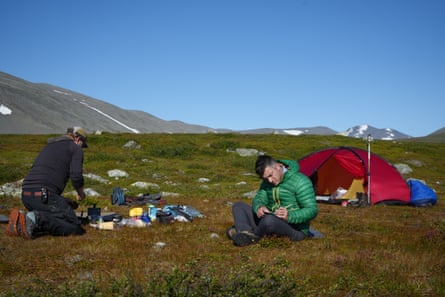
The Sami, Europe’s last Indigenous population, have braided themselves into these landscapes as tightly and beautifully as the thread of pewter in their traditional handicrafts. The Sami word for the Laponia area is Sápmi, the same word they use to refer to themselves, highlighting the indelible link between people and their environment. Sarek sits on the Sami’s traditional reindeer herding grounds. While they might now use motorcycles and snowmobiles to follow and herd the reindeer, their knowledge of and kinship with this landscape remains undimmed.
So, not wilderness, then, but certainly wild. To even reach the start of the Präststigen, I had crossed the Arctic Circle on the road north from Luleå, met with Christian at his warehouse in Jokkmokk (home to the famous Sami winter markets each February) to load up our rucksacks for the six-night trip, and journeyed an hour farther west to the town of Kvikkjokk. From there the trailhead was a short boat ride across Sakkat lake.
The first section of the trail climbed steeply, switchbacks tightly coiled in birch woodland; wild blueberries and cloudberries littered the path. Eventually we left the woodland and reached the ridge for our first proper view of Sarek. Away to the north was the cloud-covered summit of Bårddetjåhkkå, where in 1911 Swedish geologist Axel Hamberg built an observatory to conduct meteorological and glacial studies.
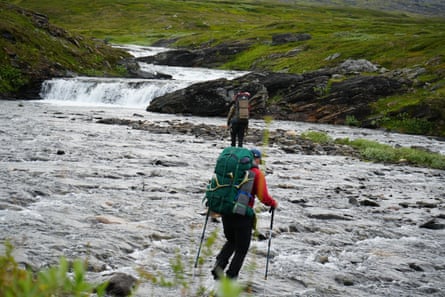
We were following the guidebook Priest’s Path by Hans Fowelin (currently only published in Swedish), and while there was no marked trail, Fowelin had plotted a path of cairns we were supposedly to follow. While some were solidly built square towers, most were little more than one rock propped up against another, mere whispers of waymarkers in a landscape of scree and moraine.
Alongside the familiar buttercups and heather there were bright blue blossoms of mountain gentian, red ptarmigan berries and otherworldly looking wild angelica, a source of vitamin C for the Sami. Sarek was visited by botanist Carl Linnaeus during his epic expedition through northern Sweden in 1732, and the first part of the Priest’s trail is sometimes referred to as Linnaeus’s trail.
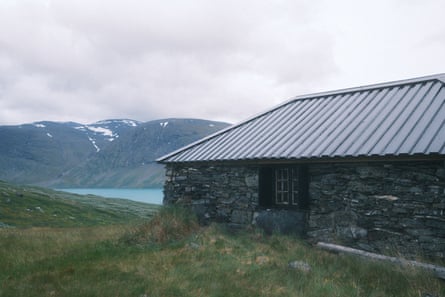
On our fourth day of hiking Alkavare chapel appeared on a bluff above the glacial blue waters of Alggajavvre lake, surrounded by high peaks and valleys. It was utterly beautiful. I had a grin on my wind-burnt face for most of the day, one that even wading across rivers (a common feature of hiking in Sarek), shin-high in glacial meltwater, failed to dim.
After rowing across the Miellätno river, using one of the rowing boats left on each bank by the park rangers, we climbed up to the chapel late on Saturday evening where Jacobsen greeted us with a beaming smile.
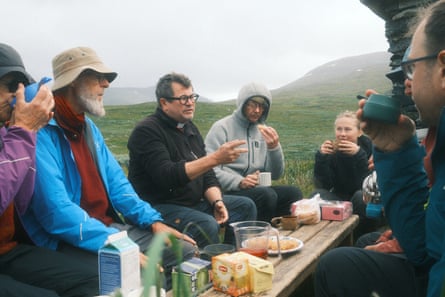
Sunday mass began promptly at 11am the following morning for our small band of pilgrims (we numbered 11 in total, including the priest). The altar had a simple wooden cross and cloths on loan from the church in Jokkmokk. They were in the poster paint palate of traditional Sami clothing and a reminder that it was for the Sami that the chapel had been originally built – not an act of benevolence, but as part of the forced Christianisation and eradication of their shamanistic beliefs in the 18th century.
The trip was provided by Laponia Adventures, which will lead a guided, small-group trip along the Priest’s Path to Alkavare in July 2027, and offers equipment rental and advice for independent hikers. For more information on Sarek national park and northern Sweden, visit arcticsweden.com