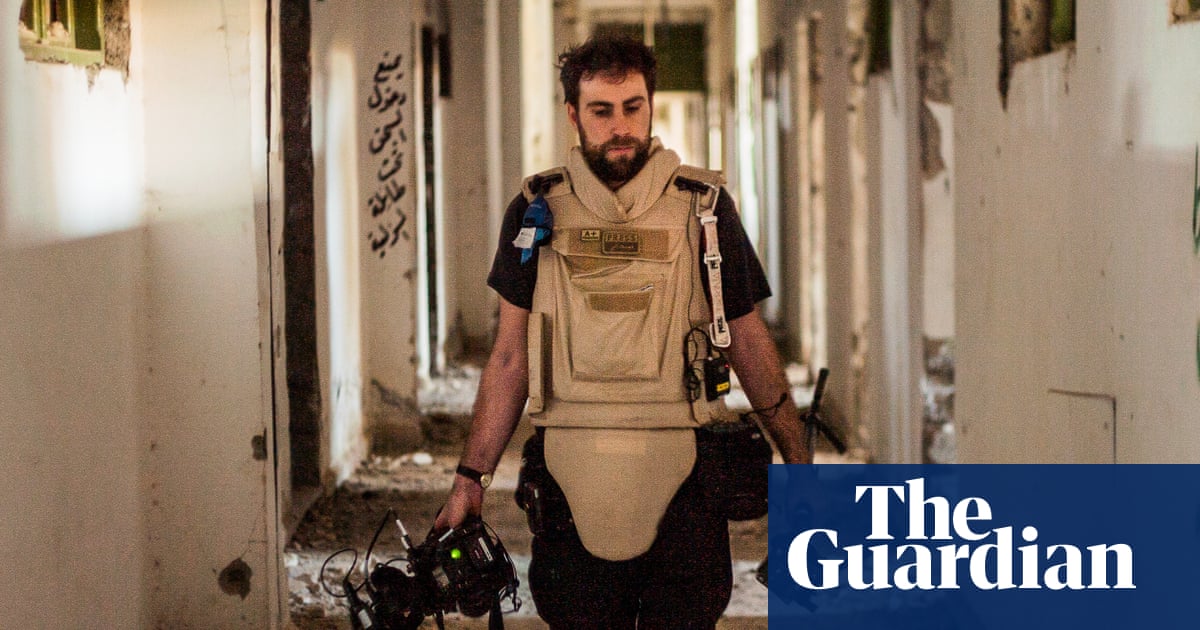
It’s also a story of American exceptionalism – the way the US saw itself in relation to the rest of the world. Moreover, “I don’t mean this in a crass way,” Baker says, “but through Austin’s story, we also learn a lot about the last 14 years of the civil war in Syria. We really go inside the regime’s industrial complex of disappearance and torture. As episode two begins, Assad is gone, and we enter into these facilities.”
Ultimately, the hunt for the people who know the truth about Tice, and the hunt for those responsible for these atrocities, are one and the same. “A lot of my work for the last decade has involved intelligence and espionage and dealing with intelligence agencies, and I have never received so many leaks from so many different places as I have with Austin Tice – from every direction imaginable. It is absolutely extraordinary.”
This is Baker’s third series of I’m Not a Monster for the BBC. The first two – one about an American woman, Sam, who disappears into the Islamic State caliphate with her young children when her husband becomes a sniper, and the other one about Shamima Begum – are extraordinary pieces of journalism. But just as extraordinary is the backstory of how they came about.
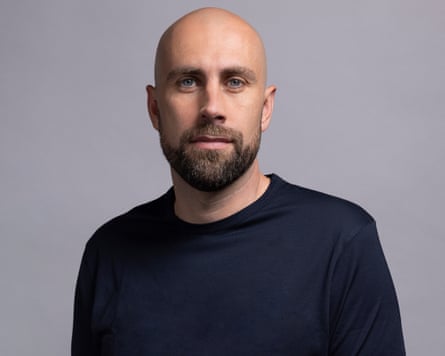
What he didn’t hear until too late was a massive articulated lorry, trying to manoeuvre its way down the street to deliver a car bomb. “I know this bit because Isis, the bastards, were filming from a drone. It detonated right outside our house and I was buried in the collapsing building, and broke my back.”
As he was recovering in England after his evacuation, a source of his heard he’d been injured and got in touch. “He’s now almost like a friend, but a source like that always has an agenda,” Baker says. “He showed me a home video from inside Raqqa, which was then the Isis capital, of a young American boy called Matthew being forced to assemble a suicide bomb. This wasn’t a propaganda video, it was a home video.”
Matthew was Sam’s oldest son. “I was obviously in a mental state, having just walked out of something by the skin of my teeth. But I thought: ‘I’m gonna find this kid,’ which sounds incredibly idealistic, but seven months later, I did.”

Baker was also, after a long research trip to Turkey, able to piece together the role of Canadian intelligence in getting Begum across the border, an act which in itself (in my view) was cynical enough that it should solidify Begum’s case that she is more victim than terrorist. He plays down the credit for that exclusive – had it been an action of British intelligence, he says, he’d never have been able to prove it, “because of the tradecraft. Whereas if you look at some of the American or Canadian, or even some European agencies, the tradecraft doesn’t seem to be there in the same way.”
The Dutch woman was repatriated to the Netherlands, where she served some of her prison sentence, before it was overturned on the basis that she had been groomed and abused by her husband. “Tens of thousands of people from potentially as many as 100 nations were convinced to go to Isis,” Baker says. “They had a highly effective campaign. Which isn’t to say that someone who’s been with Isis isn’t a threat, but you will struggle to find a security expert who’ll say that our current strategy” – stripping people like Begum of statehood – “is making us safer.”
Baker and his colleagues received a large number of death threats after that documentary. It touched on everything: terrorism and foreign policy, who gets to be British and whose Britishness will always be conditional, how much transparency one can ever expect from one’s government. “By the end of that programme, it wasn’t really about Shamima any more.”
“In Britain, when people say they have an intelligence source, they often mean they’ve spoken to a press officer,” Baker says. “In America, and particularly in Washington, that world is much more accessible. You can meet intelligence officers or senior law enforcement at dinner parties or even in bars. And still, a great deal of what I’m told I either can’t stand up or I’m told I can’t use. I will say, though, that under the Trump administration, people have become much less inclined to speak.”
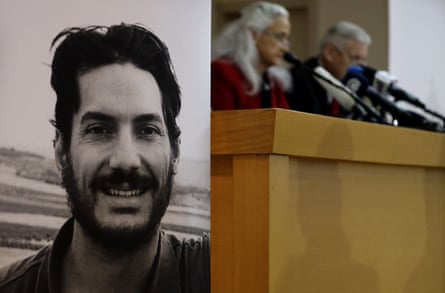
I wonder whether Baker chose Tice’s story because he identified with him: a young guy in a war zone, playing stark odds and never knowing which, among myriad dangers, might be decisive. “No, what I identified with was his mother. I remember seeing her do a press conference, nine or 10 years into his disappearance, and thinking about my own mum. I’m from a single-parent household – we’re very close. I just thought, ‘Jesus Christ, what an awful existence to have.’”
He thinks he has emerged from this investigation with “a pretty decent idea about what may have happened to Austin. Whether or not we could ever be definitive about it is a different thing.”