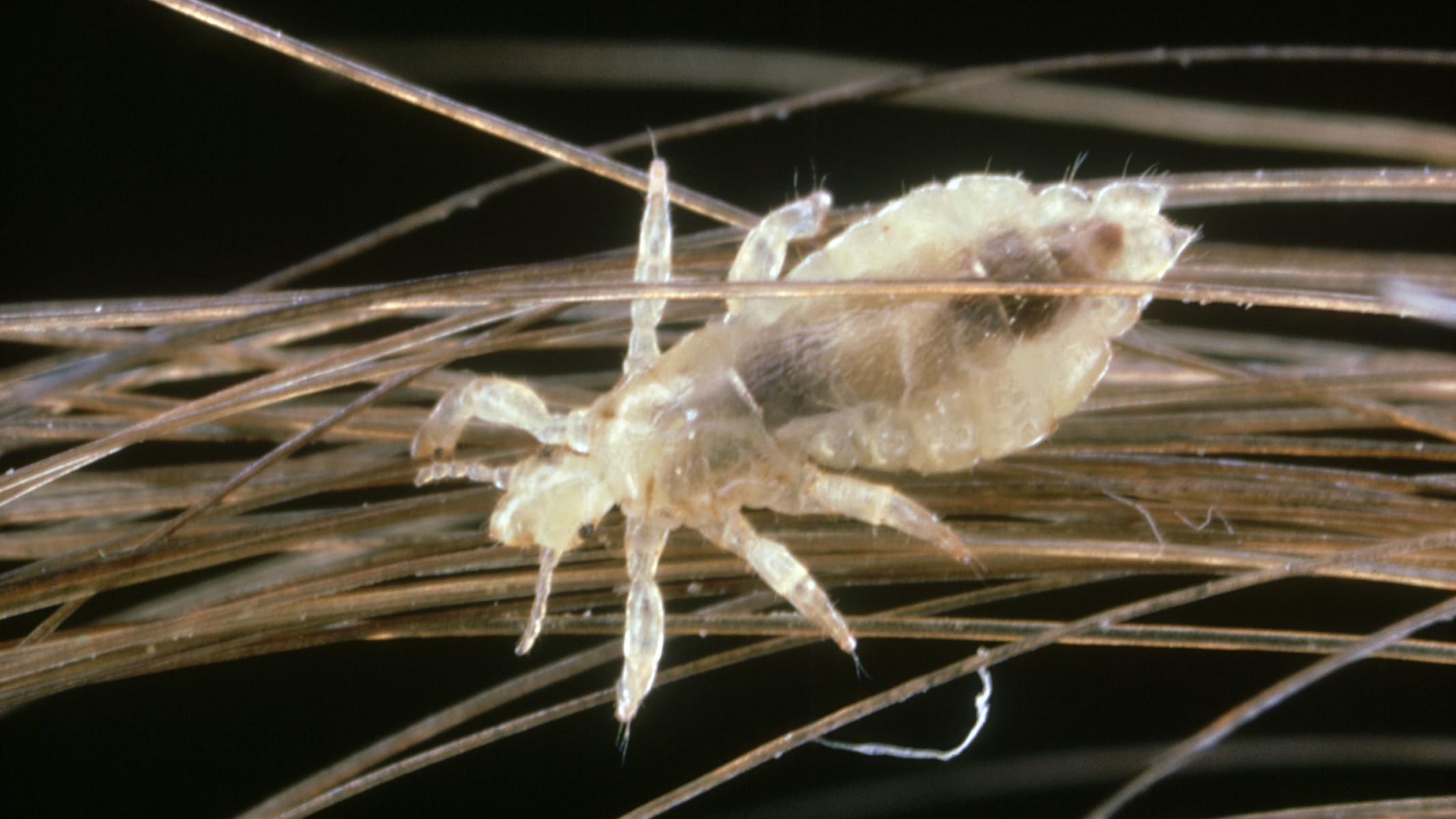
No. There are three different types of lice that feed exclusively on humans: head lice, pubic or “crab” lice, and body lice. Unlike head lice, which have elongated bodies, mostly affects people without access to housing, clean clothes, and regular bathing, CDC says.
How do head lice spread?
Since head lice can only crawl and not jump or fly, they typically spread via head-to-head contact. “That’s why it happens more in kids, because they play in close proximity,” Torres Zegarra says.
Head lice can also spread through objects that touch the head, such as combs, hats, helmets, and pillowcases. But this type of indirect transmission is much less likely since head lice typically survive for less than a day when away from the scalp, and nits can’t hatch at temperatures cooler than that of the human scalp, AAP says.
Getting head lice has nothing to do with personal hygiene or the cleanliness of the environment, and is caused solely by exposure to an infested person.
If there’s an outbreak of lice at your child’s school or daycare, that’s not a guarantee they’ll get it. Though head lice frequently spread in schools, research has found that Animals don’t get or spread head lice.
How do you know if you or your child has head lice?
An itchy scalp is the most common symptom of head lice, “particularly behind the ears and near the back of the neck,” Armstrong says. “Some people also describe a tickling sensation or the feeling that something is moving in the hair. Scratching may produce redness, small sores, or, occasionally, a secondary bacterial infection.”
People can have head lice without symptoms, too. “With a first infestation, itching may not begin for four to six weeks because it takes time for the body to develop an allergic response to louse saliva,” Armstrong says.
Examining the hair and scalp under bright light and finding live crawling lice is the best way to diagnose a head lice infestation. Using a magnifying glass or a special lice comb can help with this process, AAP says. “Nits located farther from the scalp are often empty or no longer viable, so their presence alone does not necessarily indicate an active infestation,” Armstrong says.
The CDC recommends that people visit a doctor if they suspect they may have lice.
Who is at risk of head lice?
Research suggests that How do you treat head lice?
In some cases, head lice can be home remedies such as using mayonnaise, melted butter, or olive oil could work to suffocate the lice, though these methods are not FDA approved or recommended, and more research still needs to be done on their effectiveness. A prescription oral medication can also be used.
Some internet sites recommend using essential oils and other botanical products to kill head lice, but the AAP says “the safety and efficacy of natural or herbal products are currently not regulated by the FDA, and until more data are available, their use in infants, children, and adolescents should be avoided.” The AAP also stresses that head lice treatment is only recommended for people “in whom diagnosis is highly suspected or proven.”
Doctors say that cutting or shaving the hair of an infested person isn’t necessary, and it does not always work to get rid of head lice.
“Long or very thick hair may require more product and more time to comb thoroughly, but it can be treated successfully without removing the hair,” Armstrong says. “If live lice remain after treatment has been used correctly, a clinician should determine whether the cause is medication resistance, reinfestation, or an incorrect diagnosis before additional treatments are applied.”
How do you prevent head lice?
“There is no completely reliable way to prevent head lice, especially among young children who naturally play in close contact. The most effective step is to limit direct head-to-head or hair-to-hair contact when lice are known to be circulating,” Armstrong says.
AAP says parents and other caregivers could check children regularly to catch and treat early infestations, and children can be taught not to share personal items such as combs and hats. They shouldn’t refuse to wear helmets because of fear of head lice, however, particularly since the spread of lice through objects is uncommon, AAP says.
Ultimately, Torres Zegarra says “there’s no need to panic” when head lice arise. “It’s a nuisance problem but not a health crisis,” she says, adding that children with head lice shouldn’t be quarantined or kept away from school.