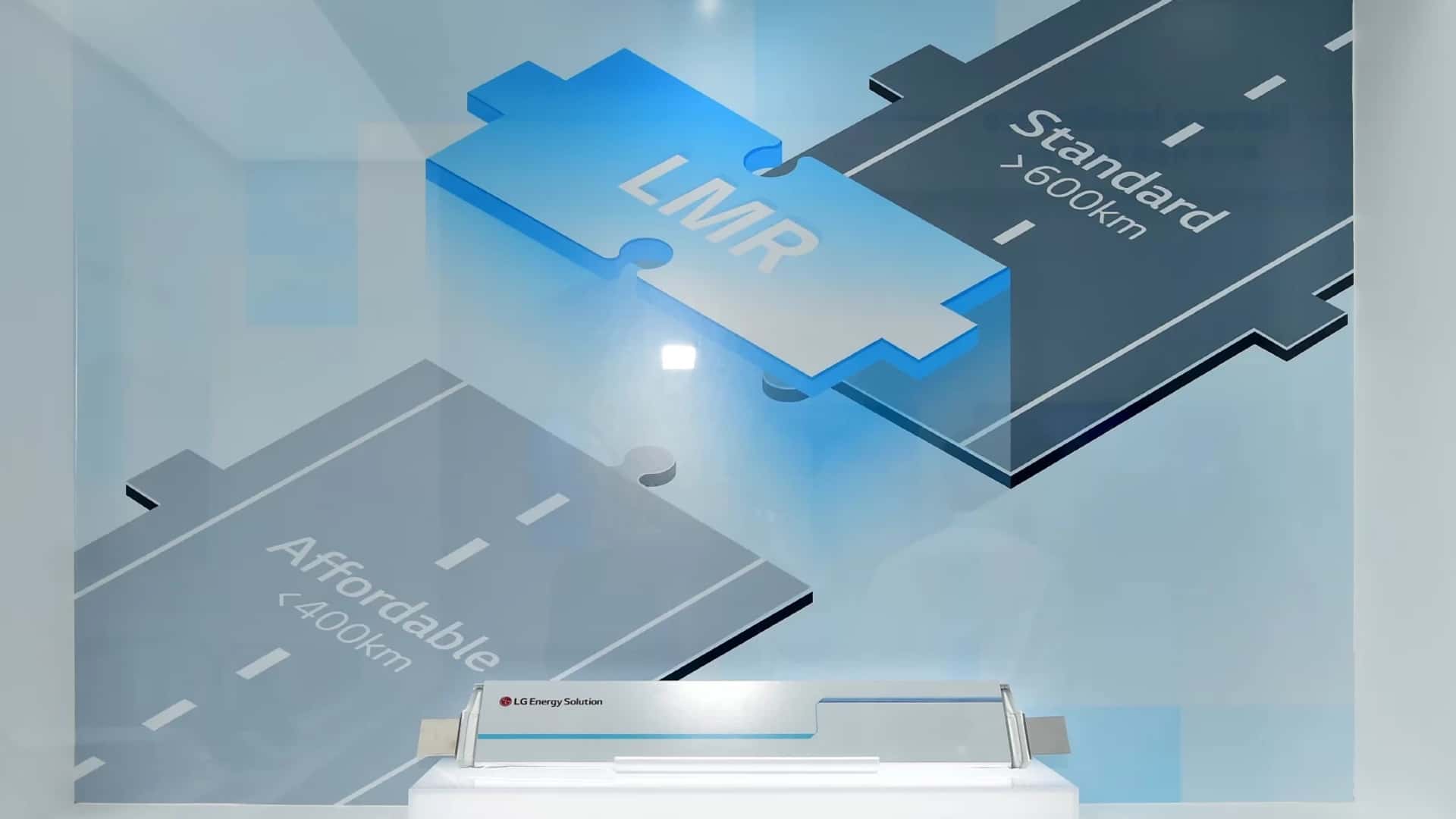
- LG found ways to improve LMR battery durability by changing operating voltages and the manufacturing process.
- LMR promises lower costs than nickel-rich batteries and higher energy density than LFP.
- The results are promising, but charging speed, cold weather performance, and real-world longevity remain unproven.
LG Energy Solution and Seoul National University provided a useful answer to at least part of that problem. Their experimental LMR cells retained an impressive 92.2% of their initial energy after 883 charge-discharge cycles. EVs are typically expected to last between 1,000 and 2,000 charge cycles.
“This study identified the causes of degradation in LMR batteries from the perspective of oxygen reversibility and demonstrated that cell stability can be improved through electrochemical protocol design alone," Professor Jongwoo Lim of Seoul National University said in the study. "We confirmed that achieving long-term stability in LMR batteries requires comprehensive consideration of not only charging conditions but also discharge conditions.”
In these latest experiments, LG tried to better control oxygen reactions inside the cathode. Oxygen is what helps LMR store energy, but the reactions it causes inside the cell need to reverse during discharge, or else they can damage the structure and cause gas buildup, which is not something you want inside a tightly packed battery cell.
The researchers changed the operating voltages to better control those reactions. Lowering the charging cutoff from 4.6 to 4.3 volts improved oxygen recovery from 86% to 97%. Allowing discharge down to 2 volts instead of 3 volts also helped. LG paired those adjustments with a lower-temperature formation process, which is the initial conditioning cells undergo during manufacturing. This optimized protocol also helped reduce both gas generation and structural damage.

LG explains that “This research addresses one of the key challenges facing LMR batteries. It demonstrates that stable battery life can be secured even in large-format cells by effectively suppressing gas generation, providing an important foundation for growth in the next-generation LMR battery market.”
Some automakers are already heavily invested in LMR. GM expects substantial cost savings from implementing this chemistry in its production EVs. However, cheaper ingredients only get you so far. LMR batteries have struggled with capacity loss and declining voltage, both of which reduce a battery's energy output.
GM has projected 33% higher energy density than LFP at comparable cost for its own LMR cells. The promise of LMR is one reason the company is reconsidering whether LFP even belongs in its future EV lineup. GM and LG had previously announced plans for U.S. LMR production in 2028.
But while this new research from LG is encouraging, the company hasn’t yet demonstrated whether its LMR cells beat production LFP batteries on charging speed, cold-weather performance, or lifespan. This is progress nevertheless, and it keeps LMR batteries on the radar, but until we see them in a production EV, we won’t know how much of that promise survives the trip from the lab to your driveway.